TL;DR: Measure the full cigar from foot to intact cap, then its widest cross-section without compressing it. Compare those figures with usable case measurements. A band can identify a brand or line but usually does not give the size.
Start with the exact product listing
A format name is a useful search term, not an exact measurement. Find the specific cigar on the manufacturer’s site or read its box label. In 6 × 52, the 6 normally describes inches of length and the 52 describes ring gauge.
Measure length without trimming the answer
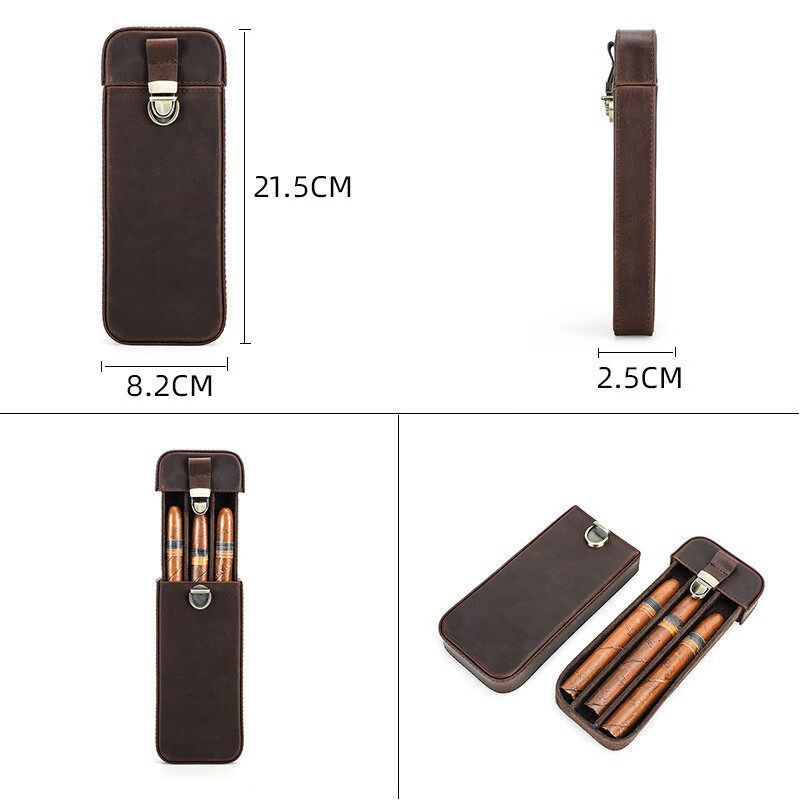
Lay the cigar beside a ruler. Include a pointed cap. If it will travel inside a tube, compare the tube’s exterior dimensions instead; the bare cigar’s measurements do not describe that package.
Measure width gently
Use calipers with minimal contact or a purpose-made gauge. A paper comparison circle provides only an approximate visual reference. Measure the widest body section rather than the tapered tip. Do not force a cigar into a gauge or squeeze a wrapper to obtain a smaller reading.
Convert ring gauge
Diameter in millimeters = ring gauge × 25.4 ÷ 64. A 52 is 20.6375 mm and a 60 is 23.8125 mm. Use the converter or the printable ring gauge card.
Box-pressed cigars need actual width
Check the widest cross-section and enter that measured figure in the case finder’s width field. No single extra allowance applies to every press shape. If the widest width is unknown, the tool will not mark the shape as a confirmed dimensional candidate.
Compare the right measurements
Use the case finder for current store options or the manual checker for a case you already own. Do not infer usable length by subtracting a generic wall thickness from the outside.